
Karrot: Buy & sell locally
Danggeun Market Inc.Social
4.2954.00 Reviews
- Version
- 26.34.1
- Installs
- 10.00M
- Age Rating
- Teen
Screenshots




Our Review of Karrot: Buy & sell locally
 Analysis by Appyee
I installed Karrot: Buy & sell locally with one simple goal: clear out useful things I no longer needed without turning the process into a shipping project. That starting point matters because this is not just another general marketplace. It is a social app built around nearby buying and selling, so the experience depends heavily on whether people in your area are active and responsive.
My first impression was that Karrot makes local resale feel less formal than a large classified site. You browse items from people around your community, contact a seller, and arrange the next step directly. The appeal is obvious for bulky furniture, household goods, children’s items, and anything that is inconvenient to package. At the same time, the local focus creates limitations that become clear once you try to complete a deal rather than simply scroll through listings.
From an unwanted item to a completed local handoff
I use this section to follow the practical path from deciding an item is worth listing to making sure a local exchange is genuinely agreed. The key shift is to treat preparation and clear expectations as part of the transaction, not as chores after posting. That makes the next step—turning an appealing listing into a dependable conversation—much easier to manage.
Starting with the item, not the app
The best way to use Karrot is to begin with a realistic question: would someone nearby want this enough to collect it? I found that this changes what is worth listing. A small item with little resale value can be more trouble than it is worth if messages take time and the handoff is awkward. A clean lamp, a spare kitchen appliance, a desk, or a nearly unused piece of equipment makes more sense because a local buyer can see the value without waiting for delivery.
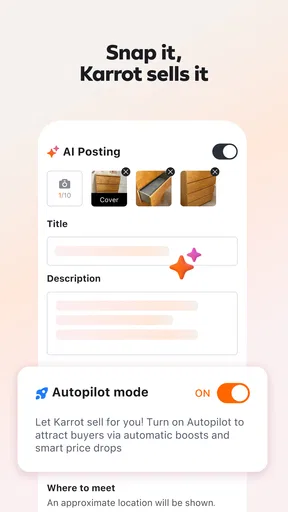
Before posting, I would photograph the item in good light and show the details that normally cause disappointment: marks, missing accessories, wear on corners, and the actual size. Local buyers often decide quickly, but that does not mean they want vague descriptions. A clear listing reduces the back-and-forth and helps both sides avoid a wasted meeting.
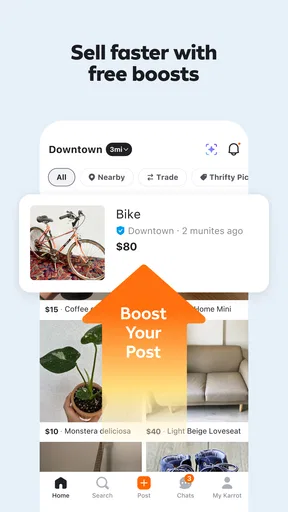
Karrot is free to use, and its social character makes the listing feel more like a neighborhood exchange than a formal retail transaction. The app is published by Danggeun Market Inc., and its main purpose is straightforward: connect people who have unwanted items with nearby people who may be able to use them. I would not treat it as a shopfront for a large inventory, but it works naturally for occasional decluttering.
Creating a listing that survives the first questions
Writing the listing is where I would spend more care than a casual seller might expect. The title should identify the item plainly rather than trying to sound clever. In the description, I would include its condition, approximate dimensions, age when relevant, what is included, and whether the buyer needs to carry it away. For furniture, the doorway and stair situation can matter as much as the object itself.
One useful workflow is to prepare a short answer for predictable questions before publishing. If a buyer asks whether the item is still available, whether it works, or whether collection is possible on a certain day, a complete description lets you respond quickly. That matters because local listings can attract several interested people, and a slow reply may cause the conversation to go nowhere.
I also recommend deciding your boundaries before messages arrive. Know whether you are willing to hold an item, accept an offer, help carry it, or meet somewhere other than your home. This is not merely a matter of convenience. A local marketplace moves from a digital listing to a real-world handoff, so unclear expectations create friction for both people.
Browsing from the buyer’s side
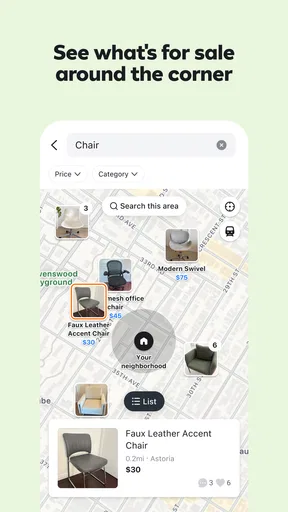
As a buyer, I would use Karrot differently from a conventional online store. I would search with a practical purpose and check several listings rather than assuming the first result is the best one. Local availability changes constantly, and the strongest reason to use the app is often the chance to find something nearby that would be expensive or inconvenient to ship.
The trade-off is selection. A large shopping platform is better when I need a particular model, exact color, warranty, or reliable delivery time. Karrot is stronger when I am flexible and willing to judge an item based on its condition and location. That makes it especially useful for furnishing a room inexpensively, replacing a temporary household item, or finding something that would be wasteful to buy new.
I would inspect photos carefully and read the wording for clues. “Used” can cover anything from nearly untouched to heavily worn, so I would ask about the specific concern that matters to me rather than sending a vague message. For electronics, that might be whether the main functions work. For clothing, it could be sizing or visible wear. For furniture, I would ask about stability, odors, and dimensions.
The message is the first handoff
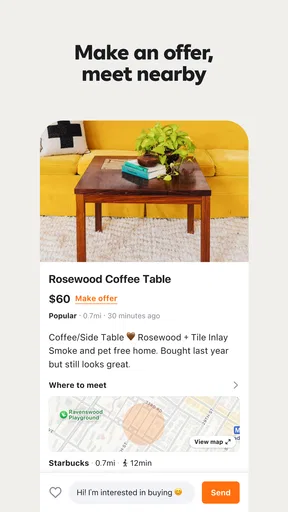
The conversation between buyer and seller is the first important handoff: the listing stops being a static post and becomes an agreement between two people. I prefer messages that confirm four things in a compact way: the item, the expected condition, the collection area, and a realistic meeting window. This prevents the common problem where both people think a deal is settled but have different assumptions.
One non-obvious advantage of the local format is that a buyer can explain a practical constraint early. If I need to bring a vehicle, a second person, or a particular carrying method, I should say so before confirming. A seller may know that an item cannot be moved through a narrow hallway, while a buyer may not realize how heavy it is from a photograph. These details are more important than enthusiastic messages because they determine whether the handoff can actually happen.
I would also avoid treating a quick response as proof of reliability. Fast communication is helpful, but the real test is whether the person confirms the arrangement and follows through. If the conversation becomes vague, repeatedly changes direction, or pressures me to ignore basic details, I would step away. Karrot makes contact easier; it cannot remove the need for ordinary judgment.
Arranging the physical exchange
The next handoff is from chat to the real world. For a small item, a public, convenient meeting point may be simple. For a large item, collection from a home may be unavoidable, which means the arrangement deserves more care. I would share only the information needed to coordinate the pickup and make sure another person knows when the exchange is happening if the situation feels uncomfortable.
Timing is a frequent source of failure. A buyer who says “later” and a seller who expects a precise appointment are not actually coordinated. I would suggest a clear day and time window, then confirm again before leaving. If the item is large, I would confirm that the buyer has transportation and enough help. This small step protects the seller from waiting and protects the buyer from arriving unprepared.
For anything whose condition is central to the purchase, I would inspect it before finalizing the handoff. That does not mean treating every local exchange like a laboratory test. It means checking the specific points discussed in the messages and making sure the item matches the description. If the condition is materially different, I would be prepared to decline rather than accepting out of embarrassment.
What the completed transaction feels like
When the workflow goes well, the result is satisfying because it solves two problems at once. The seller gets an unwanted item out of the home, and the buyer gets a useful object without the packaging, shipping delays, or full new-item cost associated with conventional shopping. The exchange can also feel more direct than dealing with a distant marketplace where every step is mediated by delivery.
That directness is the heart of Karrot. It is not trying to replace every kind of online shopping. It is most convincing when distance is the problem: a bulky chair, a box of household supplies, a child’s item that has been outgrown, or a piece of equipment that still has plenty of life left. In those cases, local pickup is not an inconvenience added to the purchase; it is the reason the purchase is practical.
The app’s scale suggests that it has reached a broad audience, with over ten million installs and an average rating of 4.2 from around 191 thousand ratings. I read those figures as evidence of substantial interest rather than a guarantee that every neighborhood will be equally active. A marketplace can feel useful in one area and quiet in another, so local activity is more important than the headline numbers.
Small habits that improve the outcome
My first practical tip is to separate “interested” from “committed.” I would not remove a listing or stop answering other people until a buyer has agreed to a specific collection plan. This is fairer to everyone and avoids losing time when a promising conversation fades.
My second tip is to photograph the item after cleaning it but before packing it away. If the buyer arrives and sees a different presentation from the listing, confidence drops immediately. A clean, honest photo also helps me remember exactly what condition was shown if several days pass before collection.
My third tip is to use the local nature of the app strategically. Instead of listing a low-value item alone, I might group related household pieces when that makes sense, or describe a larger item in a way that helps someone plan transport. The goal is not to make the listing sound more attractive than it is; it is to remove the practical uncertainty that stops local buyers from acting.
A fourth insight is that convenience is not measured only by the sale price. If I have to answer dozens of messages, dismantle an object, wait through missed appointments, and help carry it downstairs, a slightly higher offer may not be the best outcome. Karrot works best when I value clearing space and keeping the exchange local, but I should still account for my time.
Who will appreciate this app most
I think Karrot is a strong fit for people who regularly have useful household items to pass on, buyers who can collect locally, and anyone who prefers reuse over buying new. It is also appealing for people furnishing a home on a budget, because local listings can make larger objects accessible without delivery charges or complicated logistics.
It suits flexible shoppers better than specification-driven shoppers. If I need a particular brand, exact technical condition, or guaranteed arrival on a fixed date, I would choose a conventional retailer or a more structured marketplace. If I am willing to compare, ask questions, and arrange collection, the local model offers more interesting possibilities.
The Teen content rating is worth keeping in mind for households deciding who should use it. I would expect younger users to involve a parent or trusted adult in any in-person exchange, especially when collection happens at a private address. The app can support a local transaction, but normal care around personal safety and meeting arrangements still applies.
Where the flow breaks down
The biggest weakness is that the app’s usefulness depends on local density and user behavior. A polished interface cannot create a buyer for an unusual item in a quiet area. Some listings may receive little attention, while popular items can produce more messages than a seller wants to manage. That unevenness is part of every local marketplace, but it is particularly important here because proximity is the central promise.
Another friction point is the informal nature of the agreement. Compared with a retail purchase, there may be less structure around delivery, returns, product support, and standardized condition. That is not automatically bad; it keeps the process simple. But it means I would avoid using Karrot for a purchase where I need strong after-sales protection or where a hidden fault would be costly.
There is also a mismatch between browsing and completing. Scrolling through nearby items is easy, but the final steps require coordination, punctuality, transport, and sometimes physical effort. A buyer who wants an item delivered to the door may find the local pickup model frustrating. A seller who wants to list once and forget about it may be disappointed by negotiations and no-shows.
Version 26.34.1 supports the current experience I reviewed, and it runs on Android starting with version 9. I would still keep the app updated through the relevant store because marketplace tools and messaging depend on a functioning current installation. The important point for a prospective user is that this is a modern social marketplace rather than a simple static classifieds page.
My recommendation after following the full workflow
After taking an item from preparation through listing, messages, scheduling, and handoff, I see Karrot as a focused tool rather than a universal resale solution. It earns its place when local distance makes the exchange easier: bulky goods, quick household purchases, and everyday objects that deserve another owner. Its social tone makes the process approachable, but the same informality means I have to supply the organization and caution.
I would recommend it to a friend who is comfortable collecting items and willing to communicate clearly. I would especially suggest starting with one uncomplicated listing rather than uploading a whole home at once. That lets a new user learn how quickly local people respond, how much coordination a sale takes, and whether the nearby community is active enough to justify regular use.
I would skip it when I need guaranteed stock, delivery, warranties, or a predictable return process. I would also look elsewhere if I dislike negotiating or cannot manage a real-world pickup. For everyone else, the free price makes experimentation easy, and the app’s large user base gives it a credible chance of being useful. My final view is positive but practical: Karrot is at its best when the shortest path between two people is also the most convenient path for the item.
For an occasional declutter, a budget-conscious local purchase, or a bulky object that makes no sense to ship, I would keep it installed. Just remember that the successful outcome comes from the whole workflow, not the listing alone: describe honestly, confirm the handoff, plan the collection, and leave room to walk away when the arrangement stops making sense.
Verdict
Strengths of Karrot: Buy & sell locally
- Easy local listings with photos, descriptions, and asking prices.
- In-app messaging helps arrange pickup details with nearby users.
- Useful categories make browsing secondhand items quick and convenient.
- Free to list unwanted items without auction or seller fees.
- Community-focused design encourages more personal, local transactions.
Limitations of Karrot: Buy & sell locally
- Availability and activity vary significantly between neighborhoods.
- Most transactions require arranging an in-person meetup.
- Scam attempts or misleading listings can still occur.
- Some users may expect bargaining, making prices less predictable.
- Pickup-only deals can be inconvenient for bulky or distant items.
Similar Picks in This Category
View All
Meta Platforms, Inc.4.6

Instagram4.0

Likee-Live, Chat & Party Games
Likeme Pte. Ltd.4.4

Facebook Lite
Meta Platforms, Inc.4.5

TikTok - Videos, Shop & LIVE
TikTok Pte. Ltd.4.0

Moj: Free Short Drama & Reels
ShareChat4.1
Frequently Asked Questions
What is Karrot: Buy & sell locally?
Karrot is a community marketplace app designed for buying and selling items with people nearby. After setting a local area, you can browse listings for furniture, electronics, clothing, children’s products, home goods, and more. The app also supports neighborhood interaction, making it useful for arranging local exchanges and discovering items close to home.
Is Karrot safe to use for buying and selling?
Karrot includes features intended to make local trading more comfortable, such as user profiles, ratings, messaging, and location-based listings. However, users should still take normal precautions: communicate through the app, avoid sharing unnecessary personal information, inspect products before paying, and meet in a public place when possible. Karrot does not remove the need for personal judgment.
How do I buy or sell an item on Karrot?
To buy something, search or browse nearby listings, open an item, and contact the seller through the in-app chat. You can ask questions and agree on a meeting time and price. To sell, upload clear photos, add an accurate description, choose a price, and select the appropriate category. Keeping listings honest and responding promptly generally improves the experience.
Does Karrot charge fees for listings or transactions?
Karrot is primarily built around local peer-to-peer exchanges, and basic browsing, messaging, and creating listings are generally available without a traditional marketplace listing fee. Nevertheless, features, payment options, or policies can vary depending on your country and the current version of the app. Always review the relevant terms before completing a transaction.
What should I know before downloading Karrot?
Karrot works best for people who want to trade locally rather than arrange nationwide shipping. Availability, community activity, supported features, and the number of listings can differ considerably by location. You will typically need an account and location access to receive relevant neighborhood results. If your area has few users, the marketplace may feel limited until the community grows.
